
The Federation of Malaysia Manufacturers (FMM) has called for stronger innovation capabilities among SMEs and Tier-1 and Tier-2 suppliers to support upgrading, localisation and participation in global value chains.
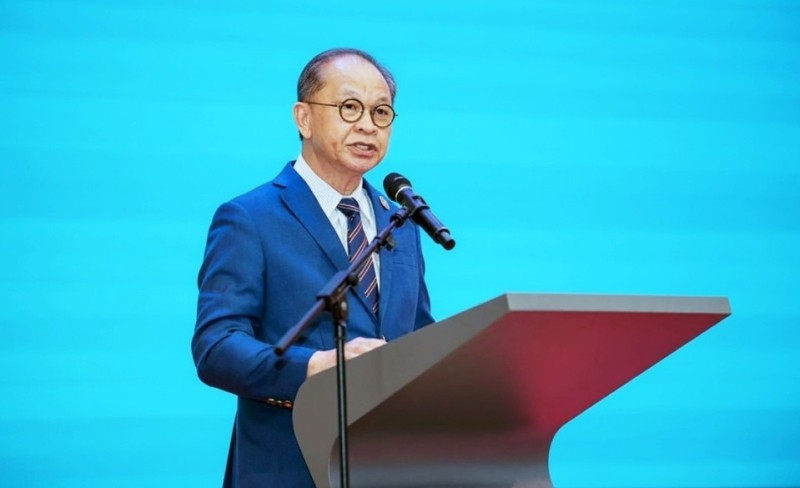
In a statement, FMM president Jacob Lee Chor Kok said the federation had proposed that the Ministry of Science, Technology and Innovation (MOSTI) introduce more accessible, SME-friendly incentives and dedicated outcome-driven funding under Budget 2027.
He said the proposals include structured industry-academia collaboration and a broader, more flexible interpretation of research and development (R&D) to better recognise SME-led activities.
“These activities include process innovation and incremental improvements, simplified tax and grant mechanisms, enhanced commercialisation, common-user facilities and matching grants to crowd in private-sector investment,” he said.
Lee also stressed the need to strengthen resilient domestic supply chains by scaling up the FMM-Malaysian Investment Development Authority (MIDA) Industrial Linkage Programme.
This includes embedding innovation, advanced technologies and environmental, social and governance (ESG) practices into supplier upgrading, promoting cluster-based ecosystems and a National Vendor Programme and accelerating localisation, import substitution and anchor-led technology transfer in high-value and strategic sectors.
He added that a coordinated one-stop advisory ecosystem is needed, alongside structured readiness assessments and digital roadmaps, simplified incentives and micro-grants, shared smart infrastructure, collaborative digitalisation models and stronger talent development in smart manufacturing, data, cybersecurity and automation.
These efforts, Lee said, would be supported by initiatives such as FMM’s collaboration with SIRIM Bhd to onboard 3,000 companies under the New Industrial Master Plan (NIMP) 2030.
FMM also highlighted the need for sustained, ecosystem-wide efforts to address perception challenges surrounding science, technology, engineering and mathematics (STEM) and technical and vocational education training (TVET) and to deepen industry involvement in career awareness through pilot initiatives aimed at fostering early interest in science and technology.
Additionally, closer and more structured collaboration between manufacturers, universities and research institutions, particularly in applied research commercialisation and problem-driven innovation, would be critical to accelerating Malaysia’s shift towards more complex, higher value-added and technology-intensive products.
In separate news, FMM signed memoranda of understanding (MOUs) with four universities to encourage local manufacturers to transition from original equipment manufacturers (OEM) to original brand manufacturers (OBM).
According to Lee, it is crucial for Malaysian manufacturers to move up the value chain through the adoption of smart manufacturing and advanced engineering capabilities.
“We signed MOUs with UCSI University, Monash University Malaysia, Universiti Sains Malaysia (USM) and Sunway University as part of efforts to strengthen academic-industry collaboration so that we can compete through technology and innovation, rather than relying solely on low-priced products,” he explained.
Additionally, Lee revealed that FMM had previously signed MOUs with six other universities and with the addition of the four institutions, the academia-industry partnership would help build a stronger research, development and innovation (R&D&I) ecosystem in Malaysia.
“We foresee more collaboration with universities. From FMM’s standpoint, we will work together with them to explore ways to integrate industry needs into academic curricula.
“We also aim to bring university students, including lecturers and professors, into the industries so that our education system becomes more industry-driven,” he said.
Source: https://sme.asia/fmm-urges-sme-centric-incentives-to-boost-innovation-supply-chains/