

Consolidated e-invoices will not be permitted to be issued for business transactions valued at over RM10,000 as well as by the electric power and telecommunications (telco) industries starting 1 January 2026.
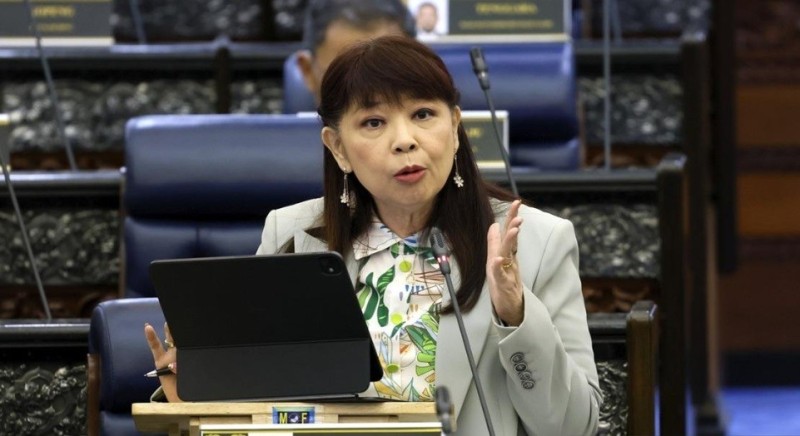
Deputy Finance Minister Lim Hui Ying said the additional consolidated e-invoicing prohibition for the power industry involves the country’s primary service providers involved in the distribution, supply or sale of electricity to end users.
As for the telco industry, it covers service providers offering postpaid plans, Internet subscriptions and electronic device bundle packages to customers,” she said regarding specific guidelines established for the types of transactions that are permitted to be consolidated under the e-invoicing system.
Meanwhile, Lim said businesses are allowed to consolidate sales and service transactions for certain transactions based on the receipt details issued to buyers.
She said traders, however, must submit the receipt details to the Inland Revenue Board within the first seven days of the following month.
The government, through the Finance Ministry, has previously determined seven activities and industries that are prohibited from issuing consolidated e-invoices.
The industries and transactions are the automotive industry (sale of motor vehicles), flight tickets and private charters, gold products and luxury goods, construction industry, wholesale/retail of construction materials, licensed betting and gaming activities and payment to agents or distributors.
Moreover, Lim revealed that a total of 735 million e-invoices have been issued by 108,000 taxpayers as of end-November 2025, with 64,317 taxpayers have implemented e-invoicing mandatorily, comprising 5,528 in the first phase, 13,964 in the second and 44,825 in the third.
“At the same time, around 44,000 taxpayers from the fourth and fifth phases have adopted e-invoicing voluntarily. This demonstrates the effectiveness of e-invoicing, with a high level of acceptance and compliance among taxpayers,” she said.
To support businesses, particularly MSMEs, in preparing for e-invoicing, Lim said the government has introduced a phased rollout for companies with annual sales below RM5 million.
The fourth phase, beginning 1 January 2026, will cover businesses with annual sales between RM1 million and RM5 million.
The fifth phase, starting 1 July 2026, will include businesses with annual sales between RM500,000 and RM1 million.
“Small traders with annual sales below RM500,000 are exempt from e-invoicing, which will benefit small businesses by not incurring additional costs to acquire the technical skills needed to implement e-invoicing,” she said.
Lim added that the government has also made available the MyInvois portal, developed by the Inland Revenue Board to further assist MSMEs.
“The MyInvois portal is freely accessible for sending e-invoices. A MyInvois mobile application has also been developed to facilitate e-invoicing via smartphones.
“The MyInvois ePOS system serves as a digital point-of-sale platform, allowing sellers to issue e-invoices in real time during transactions or enabling buyers to request e-invoices from sellers after the transaction,” she said.
Source: https://sme.asia/govt-expands-e-invoice-prohibition-to-power-telco-industries/