

KUALA LUMPUR: The Dewan Negara today passed the Cross-Border Insolvency (CBI) Bill 2025 to increase cooperation between courts and authorities in Malaysia and other nations involved in cross-border insolvency.
The Act incorporates international principles from the 1997 United Nations Commission on International Trade Law (UNCITRAL) Model Law on Cross-Border Insolvency.
Cases on cross-border insolvency currently operate on the practice of courts to recognise foreign court decisions or proceedings based on mutual understanding — the doctrine of comity — and on cooperation using the principle of reciprocity.
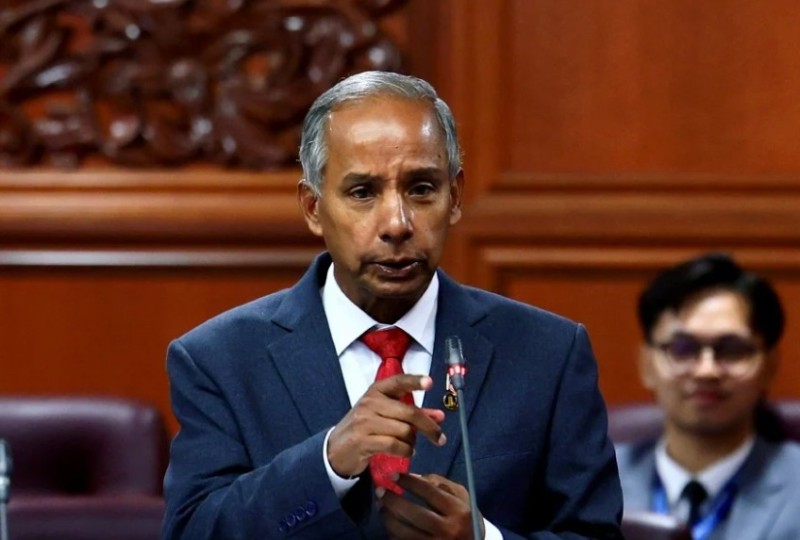
Deputy Minister in the Prime Minister's Department (Law and Institutional Reform) M. Kulasegaran, in his winding-up speech, said that the application of this Bill was limited to insolvency proceedings involving corporate entities only. He said the government was always open to suggestions on improving the Bill.
"For now, the government will consider expanding the scope of the CBI Bill to individual insolvency in the next phase, as this requires further study and different considerations.
"The Malaysian CBI Bill is based on the UNCITRAL Model Law on Cross-Border Insolvency (MLCBI), which is fundamentally more suitable for corporate entities. Individual insolvency is already governed under the Insolvency Act 1967, while cross-border issues largely involve multinational companies and foreign investors," he said.
He added that including individuals in the Bill would create an overlap with the existing domestic framework (the Insolvency Act 1967). From a policy perspective, he said, it was better for cross-border insolvency laws to regulate corporate entities only, in order to ensure jurisdictional certainty and legal clarity.
"In international practice, most countries adopting the MLCBI also limit its scope to corporate entities. This is because cross-border cases are more dominant in the corporate context (such as global corporate liquidations, multinational company groups, international investment funds), rather than individual insolvency cases.
"Individual insolvency is usually linked to social welfare, personal debts, and family obligations. Therefore, the Malaysian government has chosen to maintain the management of individuals under the domestic bankruptcy system, which is more aligned with national social policies," he said.
Kulaesgaran added that the government also fully acknowledged the importance of setting a fair, reasonable, and balanced threshold value (a minimum debt value that must be met before cross-border insolvency proceedings can be recognised or triggered). He said he was currently studying the appropriate threshold value.
"At present, the study is ongoing to determine a fair threshold by taking into account all input and perspectives, ensuring the final value set is truly balanced, in line with the objectives of the Bill, while protecting creditors' interests and safeguarding micro, small and medium enterprises in Malaysia," he said.
The law was passed after being debated by eight members in the Dewan Negara today.
Source: https://www.nst.com.my/news/nation/2025/09/1272470/cross-border-insolvency-bill-passed-dewan-negara