
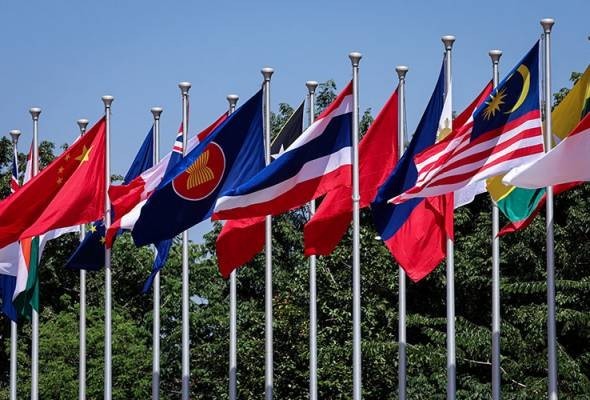

Image credit: Astro Awani
MALAYSIA is calling on ASEAN to remain agile and united as the region works towards deeper economic integration under the ASEAN Economic Community (AEC) Strategic Plan 2026–2030.
Speaking at the regional socialisation event in Kuala Lumpur, Investment, Trade and Industry Minister Tengku Datuk Seri Zafrul Abdul Aziz said the plan comes at a time of heightened global uncertainty, requiring ASEAN to rethink its approach to growth.
“Today’s changing landscape calls for agility over aggressive growth and resilience over radical expansion,” he said.
The five-year plan is part of ASEAN’s long-term goal of becoming the world’s fourth-largest economy by 2045. Anchored on principles of sustainability, digital transformation and inclusivity, the plan responds to key global megatrends such as geopolitical shifts, climate change and technological disruption.
It outlines 44 objectives and 192 strategic measures under six strategic goals, ranging from boosting intra-ASEAN trade and financial integration to promoting green growth, innovation and participation of vulnerable communities.
Furthermore, he said strengthening trade within the region is a top priority, as ASEAN looks to reduce non-tariff barriers and unlock the full potential of its internal market.
“By further reducing persistent non-trade barriers, we can realise the fuller potential of intra-ASEAN trade,” he said.
The plan also aims to improve market access for small and medium enterprises (SME), deepen integration in services and investment and scale up innovation-led growth. One of its headline targets is to double the region’s digital economy to US$2 trillion (RM9.4 trillion) by 2030.
Beyond trade, the plan promotes green financing, energy security and improved productivity, positioning ASEAN as a competitive and sustainable economic bloc.
Tengku Zafrul further emphasised that ASEAN must also avoid overreliance on a single trading partner and instead expand its engagement with both traditional and emerging markets.
He added that ASEAN’s strong fundamentals — including a young population, natural resources and political stability — remain key strengths.
“As Chair, we must ensure that its aspirations are not just conceptual, but also very real — realised and materialised for the benefit of ASEAN’s businesses, industries and people,” he said.
The session, a follow-up to the signing of the Kuala Lumpur Declaration on ASEAN 2045, was attended by more than 600 stakeholders from across the region, forming part of Malaysia’s efforts to raise awareness and build support for the strategy.
Source: https://themalaysianreserve.com/2025/06/12/tengku-zafrul-asean-must-stay-agile-to-reach-2030-economic-goals/amp/