

THE global trade landscape has been marked by uncertainty following US President Donald Trump’s “Liberation Day” tariffs, which came into effect this month.
These tariffs ushered in hefty new taxes on goods from Asia, the world’s manufacturing hub. Malaysia was not spared, as the US imposed a sweeping 24% tariff on Malaysian imports.
This decision presents a direct challenge to Malaysia’s export-driven economy and highlights the fragility of international trade relations in the 21st century.
As Malaysia’s second-largest export destination — accounting for 13.2% of total exports in 2024 — the US plays a crucial role in the country’s trade relations.
However, the tariffs — justified by claims that Malaysia imposes excessively high tariffs on US imports — could have significant long-term consequences on several key industries and the overall economic outlook for Malaysia.
To shed light on these developments and their potential impact on Malaysia’s trade resilience, Dr Paul Anthony Maria Das senior lecturer at the School of Accounting and Finance, Taylor’s Business School provides insights into how Malaysia should navigate these new challenges and adapt its economic strategy moving forward.
“Trump’s sweeping decision to impose a 24% blanket tariff on Malaysian imports is more than just a protectionist measure.
“His justification for the tariffs is rooted in claims that Malaysia imposes an average of 47% tariffs on US imports, a figure widely disputed by local authorities,” he said.
Malaysia’s actual average applied tariff is closer to 5.6%, in line with global trade commitments under the World Trade Organisation (WTO).
This apparent misrepresentation underscores the dangers of populist trade policies that prioritise political gain over factual accuracy and fair competition.
“The sectors most vulnerable to these tariffs include electrical and electronics (E&E) — which comprises over half of Malaysia’s exports to the US — as well as rubber products, machinery and furniture.
“While certain high-tech exports like semiconductors may initially escape these tariffs, other areas of the E&E sector, such as components, finished goods and consumer electronics, are poised to face significant pressure. If these tariffs remain in place, they could directly threaten Malaysia’s manufacturing hubs in states like Penang, Selangor and Johor, leading to reduced demand and squeezed profit margins for local businesses,” Paul Anthony added.
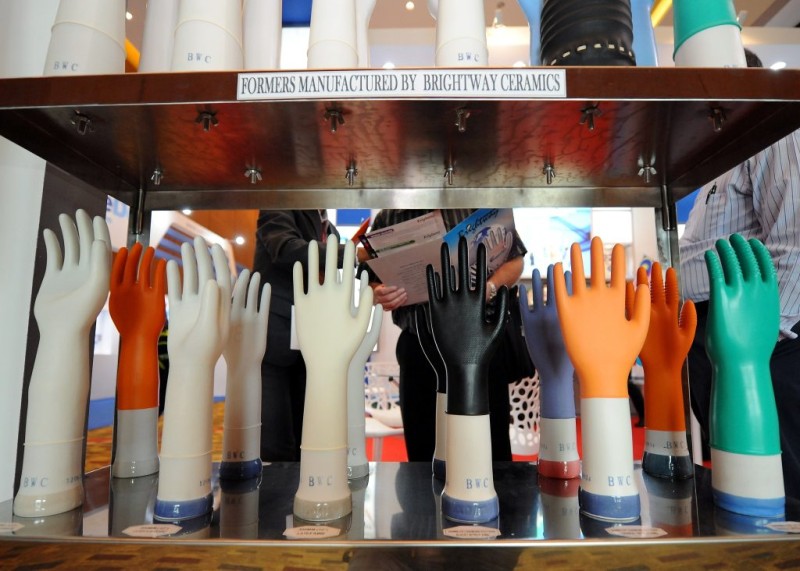
Beyond that, the disruption to the rubber and medical glove industry, which has seen rapid growth due to global demand for personal protective equipment, could result in Malaysia losing its competitive edge to other South-East Asian nations such as Thailand and Vietnam.
In terms of broader economic impact, the tariff could be a major blow to Malaysia’s growth prospects. Analysts predict that the long-term effects could shave off anywhere from 0.5% to 1% from Malaysia’s GDP growth, depending on the duration of the measure.
He said, this would be a significant setback for an economy that relies heavily on exports to fuel industrial output and employment.
Moreover, investor sentiment could be shaken, leading to a weakened ringgit and a slowdown in foreign direct investment (FDI), particularly in industries that have strong ties to the US market.
“Local stock markets may also face pressure, with companies in trade-dependent sectors experiencing earnings downgrades, further dampening overall economic confidence.
“Malaysia should consider a measured diplomatic response by engaging both multi-lateral platforms like the WTO and bilateral negotiations with the US government to address and seek resolution on the tariff issue.”
Furthermore, Malaysia should strengthen its regional alliances, especially ASEAN, to build a united front on trade issues and economic cooperation.
This moment calls for a deeper recalibration of Malaysia’s trade and industrial policy, he added.
The country must diversify its export markets and reduce reliance on the US by expanding access to alternative markets such as China, India, the European Union (EU) and the Middle East through trade agreements such as Regional Comprehensive Economic Partnership (RCEP), Comprehensive and Progressive Agreement for Trans-Pacific Partnership (CPTPP) and other bilateral partnerships.
Additionally, Malaysia should accelerate its climb up the value chain by shifting focus toward high-value manufacturing, automation and research and development (R&D) to avoid being trapped in low-margin export niches.
“A transition to more innovative-driven industries will ensure long-term competitiveness in the global market.
“At the same time, Malaysia should strengthen domestic demand by boosting internal consumption, which can act as a cushion against external economic shocks like tariffs or geopolitical tensions.
“Lastly, Malaysia must empower small and medium enterprises (SMEs) and foster digital trade by providing smaller exporters with the tools and resources they need to pivot to digital channels and regional e-commerce platforms — spaces less susceptible to tariff barriers,” said Paul Anthony.
By embracing the digital economy, Malaysia can expand its footprint and unlock new sources of revenue in less tariff-sensitive sectors.
Trump’s return to the White House signals a renewed emphasis on protectionism as a dominant force in global trade policy.
While these tariffs may serve short-term political interests within the US, their long-term consequences for Malaysia and the broader region warrant close attention.
“It is critical that Malaysia responds not only with immediate countermeasures, but also by using this moment as a catalyst for strategic transformation.
“By becoming more agile, innovative and less dependent on any single market, Malaysia can ensure its economic resilience and continue to thrive amid evolving global conditions,” Paul Anthony added.
Source: https://themalaysianreserve.com/2025/04/16/trumps-tariff-a-test-to-malaysias-trade-resilience/