
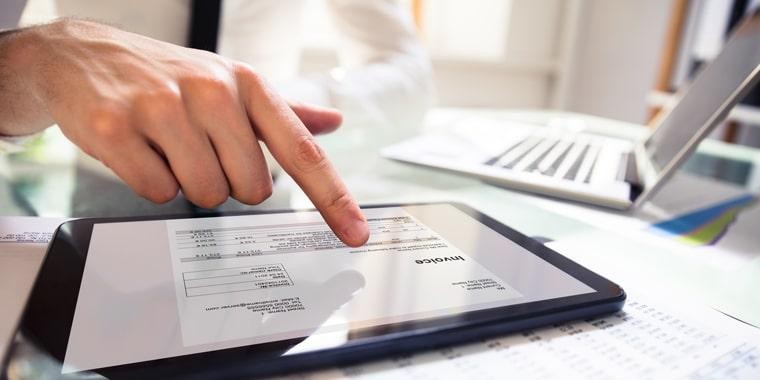

Image credit: ERP
KOTA KINABALU: The government’s plan to postpone the implementation of e-invoices for micro and small and medium enterprises with annual sales between RM150,000 and RM500,000 by six months to Jan 1 next year was described as “flexible, wise and correct”.
This was said by the President of the Sabah United Chinese Chambers of Commerce (SUCCC) and Kota Kinabalu Chinese Chamber of Commerce and Industry (KKCCCI), Datuk Michael Lui.
The government recently announced a deferment of Phase 3 of its e-invoicing implementation, shifting the deadline from July 2025 to Jan 1, 2026.
The decision follows mounting concerns from business, particularly SMEs, regarding their readiness for compliance.
The Ministry of Finance and the Inland Revenue Board acknowledged the challenges faced by SMEs, including cost barriers, limited technical know-how, and the need for additional training to facilitate a smooth transition.
Lui believes that this move can reduce the financial burden of Small and Micro and give them more time to prepare, as these entrepreneurs face challenges in IT application and e-invoice knowledge.
“We hope that the government will further seriously explore raising the annual sales threshold for e-invoices to RM500,000 so that micro-enterprises such as small businesses and hawkers can truly benefit without developing e-invoices system.
“We can accept that businesses with annual revenues of RM500,000 to RM25 million will implement electronic invoices as originally planned by the government from July 1 this year, because the ultimate goal of the e-invoice program is to enable SMEs to establish a more organized sales and purchase record system and documentation to simplify business operations.
“It can also increase revenue and reduce tax evasion by optimizing the tax system,” he said in a statement.
Lui said once the e-invoice system is officially fully implemented, small and micro businesses will also have to issue e-invoices for verification by the Inland Revenue Department, but the government must consider whether regular and long-term small businesses are able to issue e-invoices for each sale transaction.
“We believe the government is able to regulate small-micro businesses according to their size and collect the tax annually,” he said.
He said the undeniable fact is that the ultimate concept of e-invoices is to obtain complete proof of income and expenditure.
“When e-invoices are implemented, the Inland Revenue Department will be able to obtain the information of both buyers and sellers, and this information cannot be falsified.
“The end result is that the government will have to collect billions of ringgit in additional tax revenue,” he said.
E-invoicing, a digital invoicing framework designed to enhance tax compliance and business efficiency, was initially slated for implementation in three phases.
The latest postponement applies to SMEs with annual turnovers of RM100 million or less, a move that seeks to alleviate pressure on business owners who are still adapting to digital tax reporting mechanisms.
Source: https://www.dailyexpress.com.my/news/252759/delay-on-the-e-invoice-wise-chamber-says/