

AN influx of investment to build data centres. A growing role within the global supply chain. Structural reforms to bolster investor confidence.
It’s not hard to see why Malaysia is gaining increasing attention abroad.
Now entering its third full year, the focus of the unity government is, therefore, to sustain this economic momentum.
That’s tricky right now amid worries about potential tariffs that could hamper a small, open, trade-dependent economy like Malaysia.
However, it is structural reforms that set the tone for long-term development. And 2025 is set to be filled with both international and domestic ambitions for Malaysia.
For starters, this year is key for Malaysia’s international outreach as it has assumed the chairmanship of Asean.
This comes with strategic responsibilities, such as setting the agenda on key issues and representing the region on the international diplomatic stage.
Economically, this also comes at a critical time when the world is grappling with uncertainty around trade.
Among the planned 300 key Asean meetings this year, the proposal to host an inaugural Asean-Gulf Cooperation Council (GCC)-China summit is worthy of attention.
While Asean-GCC trade is largely concentrated in energy, further trade liberalisation offers new opportunities.
China – the largest trading partner and a top investor in Asean – is also critical.
Amid today’s tariff rhetoric, it is overly simplistic to assume Asean is just a re-export hub.
It is not: Asean’s gains in global trade are fuelled by its attractiveness as a foreign direct investment (FDI) magnet, which has added enormous production capacity.
Asean has traditionally seen a diversified influx of FDI, with China, the world’s second-largest economy, swiftly expanding its investment footprint into the region in recent years.
Diversifying trade links and attracting investments matter for Asean, and Malaysia, as they navigate through geopolitical turbulence.
In addition, Malaysia has also demonstrated its commitment to economic cooperation with its neighbours.
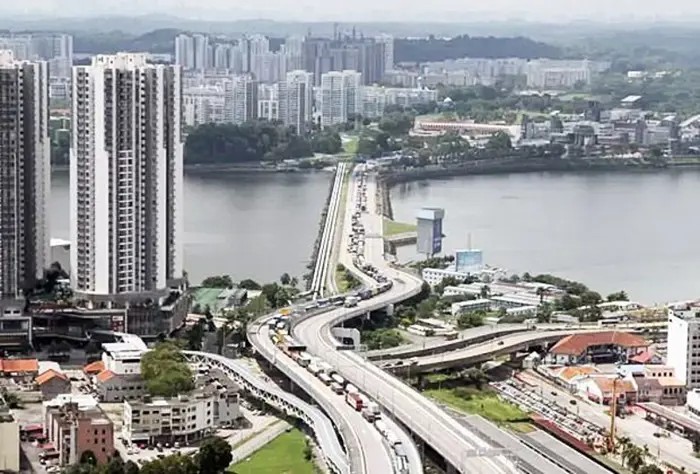
Just a week into 2025, Malaysia and Singapore have signed the highly anticipated Johor-Singapore Special Economic Zone (JS-SEZ).
This bold initiative aims to tap into both countries’ comparative advantage, introducing various generous tax incentives.
While the signing of the agreement officiates the establishment of the JS-SEZ, it marks just the start of ambitious plans.
Indeed, there is still a long pipeline of key measures waiting to be unveiled, including the New Investment Incentive Framework.
The is particularly important, as Malaysia needs to find the right set of incentives to encourage more investments in high-tech sectors, which can create high-value jobs.
It’s welcoming to see pro-business incentives but equally important is improving connectivity and facilitating the free flow of goods and people.
Once the highly anticipated Rapid Transit System is implemented to ease the long-standing traffic congestion over the causeway, this will likely encourage more cross-border consumption, similar to the pattern between Hong Kong and Shenzhen.
Domestically, fiscal sustainability is moving back into focus in Malaysia after a run of high fiscal deficits due to pandemic-related policies and disruptions.
After years of generous handouts and cash aid, subsidies ballooned even further in the past three years, averaging almost 4% of gross domestic product.
While subsidies are budgeted to fall in 2025, they’re still large and close to 80% more than the average in 2010-2019.
However, while subsidy rationalisation is a much-needed move economically, it is not easy politically.
This is why the authorities have implemented it with caution and in phases, moving from electricity to chicken and eggs, before expanding it to diesel in Peninsular Malaysia last June.
The task this year will be on the RON95 subsidy rationalisation.
Since 2021, Malaysia has enjoyed a flat rate of RM2.05 per litre for RON95, one of the lowest petrol prices in the world.
Encouragingly, the government is committed to delivering its promises, announcing RON95 subsidy rationalisation in mid-2025 under a two-tier pricing mechanism.
The goal is to cut RON95 subsidies for the top 15% (T15) of the population, while keeping the petrol price unchanged for the other 85%.
Now, the question is, what is a desirable mechanism to ensure consistent policy implementation that keeps inflation manageable?
And how to classify the T15, and does the income classification factor in geographic and socioeconomic differences?
This continues to leave some uncertainty for 2025, as the inflation trajectory will be largely dependent on the magnitude of the removal of subsidies.
We expect Bank Negara to hold its policy rate steady at 3% – a comfortable level that it has long signalled.
However, the possibility of a rate hike by Bank Negara is higher than a rate cut, though neither is our base case.
While tariff risks tend to dominate policy debates, 2025 is much more than that for Malaysia, with structural reforms offering opportunities as well.
How to advance its domestic priorities and push for international cooperation is key homework for Malaysia in the Year of the Snake.
Source: https://www.thestar.com.my/business/business-news/2025/02/10/will-malaysia-sustain-its-growth-momentum