
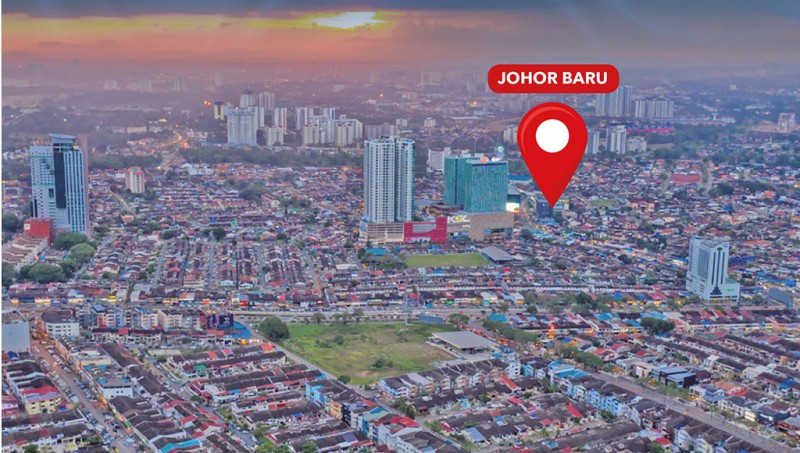

THE imminent appointment of Sultan Ibrahim Sultan Iskandar as the next Yang di-Pertuan Agong is poised to mark a significant milestone in the economic trajectory of Johor, particularly within the ambit of the southern corridor.
This development belt has ignited varied opinions among economists on the potential economic growth, the role of Iskandar Malaysia and the strategic implications of the Johor-Singapore Special Economic Zone (JSSEZ).
As the nation contemplates its economic direction, experts weigh in on the feasibility and effectiveness of Iskandar Malaysia as a key economic growth initiative, especially in comparison to other potential strategies.
Additionally, the impact of the high-speed rail (HSR) projects on economic growth, talent attraction and property dynamics shed light on the intricate balance between development and sustainability.
While recognising vast upside potential, experts also caution that outcomes depend on quick policymaking, sustainable development and continuous monitoring of execution.
As Singapore grapples with mounting property prices that now spill over into regional markets, prospects emerge for neighbours to selectively target specific sectors.
With memorandums of understanding (MoU) underway between Malaysia and Singapore concerning cross-border economic zones, rail connectivity and other collaboration avenues, Iskandar Malaysia’s rising prominence spotlights avenues for the two nations to capitalise on synergies.
The strengthening bilateral relationship, further boosted by the royal ascent, promises to unlock abundant opportunities.
What to Expect for the Southern Corridor Economic Region Financial advisor of Al Madinah International University Dr Barjoyai Bardai said the initiative is promising as it provides an additional avenue for exploration in which Southern Economic Connection is particularly intriguing, as it allows the country to delve into testing Singapore’s external economies.
“Certainly, emulating Singapore may not be our goal, considering its distinct status as an island nation with a predominant focus on service-oriented industries due to our nation being blessed with ample land and resources, and should persist in prioritising our physical economy over a service-centric one.
“However, acknowledging the contemporary reality where the service sector contributes over 60% to our economy provides more opportunities for exposure in the service economy,” he told The Malaysian Reserve (TMR).
While Singapore stands as a developed nation with a consistent but modest annual growth rate of 1% or 2%, he said Malaysia’s ambitions lie in transforming into a developing nation akin to China.
“Importantly, we must avoid leveraging this connection to artificially inflate property market prices, as our primary focus should be addressing the housing needs of over one-third of Malaysian households currently without adequate housing,” Barjoyai added.
Rising housing prices, driven by Singapore’s economic activities, raise worries about affordability for locals and may result in development that could affect housing accessibility.
Barjoyai emphasised that the sentiment leans towards preserving land as a valuable asset, with a preference for leasing rather than selling to foreigners while maintaining control over the nation’s land and ensuring long-term benefits for Malaysians.
Furthermore, in the context of flourishing property prices linked to Singapore, a potential consequence emerges as the affordability of homes for Malaysians may be compromised which arguably represents a downside to the developmental trajectory.
To safeguard locals’ interests, it is crucial to reassess the influx of foreign buyers such as preserving land, and the prospect of selling it to foreigners is met with reluctance.
Barjoyai suggested an alternative of leasing the land for a fixed period, such as 30 or 50 years, as opposed to outright selling, thereby ensuring the preservation of resources and maintaining sovereignty within Malaysian borders.
He added that Malaysia should focus on becoming a hub for financial services, offering something different from its neighbours.
He noted that Singapore’s economic pace lags behind that of other progressing nations in the region such as Indonesia, the Philippines, Thailand, Myanmar and Vietnam.
“The sluggish growth is attributed to Singapore’s status as an already developed nation and we aim to leverage the untapped market potential and expand our presence,” he said.
Meanwhile, Universiti Keusahawanan Koperasi Malaysia assistant professor Abu Sofian Yaacob said incorporating the south corridor into the economic growth strategy is beneficial overall but Malaysia must remain cautious about its inclusion of Forest City.
“Johor presents numerous opportunities for potential business, particularly in the manufacturing and financial sectors and if the state can provide infrastructure comparable or superior to that of Singapore at a lower cost, it could certainly establish itself as a formidable competitor,” he told TMR.
Based on Iskandar Malaysia’s framework for a comprehensive development plan (CDP 2.0) 2006-2013, the growth and development of Iskandar Malaysia has been facilitated by four fundamental elements, namely the formation of an authority in the form of the Iskandar Regional Development Authority (Irda).
It is to facilitate growth and development, a comprehensive plan to guide overall growth, investment and implementation of catalytic projects.
UM Consultancy Centre deputy director Dr Azni Zarina Taha said there is significant potential for rapid economic growth if the government revitalises the southern corridor economic region, particularly Iskandar Malaysia, with the direction to enhance growth through private investments.
This could yield substantial economic benefits and attract cross-border investments from both Singapore and Indonesia. She said Johor’s proximity to Singapore will enable it to entice several companies to relocate or open new offices as both commercial and residential space is cheaper in Malaysia.
Azni Zarina said a MoU between Malaysia and Singapore is scheduled to be signed on Jan 11 concerning the JSSEZ.
The MoU aims to encompass various economic sectors such as tourism, education, healthcare, finance, creative industries and high-tech manufacturing facilities.
This allows the country to broaden its foreign direct investments (FDIs) and provide multinational companies with expanded operational opportunities.
Emphasising the Forest City in Iskandar Puteri as a catalyst for Malaysia’s economic growth, she highlighted its role as a futuristic and green city integrating environmental sustainability, green innovations and advanced technology tailored for sustainability-oriented industries, featuring industrialised buildings to enhance efficiency and reduce waste.
The JSSEZ will also include the development of the HSR and light rail transit (LRT) that will complete the whole ecosystem for Iskandar Malaysia.
The investment of the transportation system will become the main driver towards promoting the southern corridor as a main investment destination in the region.
Collaborative efforts between Malaysia and Singapore are essential to cultivate special agreements facilitating the exchange of investments, goods and talent, aiming to enhance the entire business ecosystem and streamline cross-border flows, with Singapore being the second-largest foreign investor committing RM33 billion between 2006 and 2023.
Azni Zarina viewed the strong bilateral relationship between the two countries as crucial for Iskandar Malaysia’s success with the recently signed agreements on digital and green economy making this connection even stronger.
“The collaboration between small and medium enterprises (SMEs) in both countries has strengthened through an MoU between Enterprise Singapore (ESG) and SME Corp Malaysia, concentrating on sharing knowledge and best practices related to market access, digitisation and sustainability.
“This also allows SMEs to collaboratively design pilot projects, conduct feasibility studies and implement targeted strategies to address these issues, emphasising the importance of nurturing and developing the start-up ecosystem for both nations to attract additional capital, expertise and talent,” she elaborated.
The strategic location of Iskandar Malaysia contributes to the country’s economic prosperity by drawing Singaporean tourists, fostering cross-border dynamics that enhance the economic viability of the southern corridor.
The development of a smart and green city in Iskandar Malaysia to support the growth of businesses may attract talent and wealth from other neighbouring countries such as Hong Kong, China and Japan.
A focus on more private schools could entice expatriates to stay and the enhanced ecosystem is expected to attract companies, contributing to increased wealth and talent in the corridor.
Johor has ample land area and a pool of local talent suitable for establishing a production hub, while Singapore excels in technology and expertise for the production of technology-related goods.
The synergy between these two regions brings opportunity to capitalise on their respective strengths.
The data in Iskandar Malaysia’s framework for CDP 2.0 showed that the workforce there grew in tandem with the population growth due to a comparatively lower workforce participation rate, while total employment grew slightly lower than targeted between 2006 and 2010.
There was a total of 730,000 employment in 2010 against the 750,000 projected in the CDP 2006-2025.
The workforce participation rate and employment resulted in a comparatively higher unemployment rate of 3%.
Iskandar Malaysia also faced an insufficient supply of human capital, largely due to the skill mismatches.
The profile of human capital in Iskandar Malaysia indicated that more than 50% of workers have secondary-level education while 20% are graduates.
However, most of the graduates are from the arts, social and humanities disciplines. The educational background of the workforce directly contributes to the level of income in Iskandar Malaysia.
In 2012, the average monthly household income in Iskandar Malaysia was RM4,460 while the bottom 40% of the households (B40) earned less than RM3,000.
Poverty households that earned less than RM760 accounted for 1.1% of total households.
HSR KL-Singapore: Economic Impact and Transportation
Transportation infrastructure forms a pivotal foundation underlying Iskandar Malaysia’s economic potential.
Experts analyse the significant beneficial impact expected from strategic rail projects improving connectivity between Malaysia and Singapore, and enhancing domestic integration.
The HSR promises immense opportunity to stimulate growth, mobility and foreign investment — strengthening competitiveness and capitalising on synergies between the two neighbouring countries.
While cautioning that actual outcomes depend on prudent implementation, sustainable development policies and continuous monitoring, the projections clearly spotlight such initiatives’ vast potential upside.
By advancing hard and soft infrastructure schemes linking Iskandar Malaysia with Singapore, Malaysia can strategically position itself to unlock abundant promise. Universiti Teknologi Malaysia Geotechnics and Transportation senior lecturer Dr Mohd Khairul Afzan Mohd Lazi said the HSR and East Coast Rail Link (ECRL) projects in Malaysia are expected to have a significant economic impact.
“The HSR is expected to increase mobility, local economic growth and foreign investment, while the ECRL is expected to improve transportation, help regional economic development and create investment opportunities and job creation in the areas it passes through,” he told TMR.
Mohd Khairul Afzan opined that the real benefits depend on good implementation and continuous monitoring of economic and social impacts.
“Rail projects are designed to integrate with existing transportation infrastructure and public transit systems through shared stations, capital interchange and intelligent system management.
“However, concerns about long-distance connectivity remain, and must be addressed with schedule coordination, performance monitoring, and continuous adjustments to ensure the entire transportation system functions efficiently and effectively,” he added.
Mohd Khairul emphasised that the projects are meant to provide comfort to passengers.
“Both HSR and ECRL are expected to overcome some major transport connectivity gaps between Malaysia and Singapore and within the country,” he said.
The HSR is expected to speed up travel and improve economic links between KL and Singapore, while the ECRL is expected to open accessibility to the east coast of Peninsular Malaysia, accelerate regional development and connect rural areas with other transport services.
The effectiveness of these projects depends on good implementation and continuous monitoring of socioeconomic impact, he cautioned.
“Rail projects in Malaysia are set to have a significant positive impact on the country’s competitiveness and connectivity in Asean,” he said.
HSR will also strengthen Malaysian trade and logistics in the region, increase education and employment opportunities and help achieve economic diversification.
“Long-term sustainability and effective project management are critical to ensure maximum benefits and to make Malaysia a key player in the growing Asean regional cooperation framework,” he stressed.
Mohd Khairul Afzan also said strategic rail projects in Malaysia promise a significant positive impact on urban development patterns and mobility in several key areas.
“Designed to improve connectivity between KL and Singapore, the HSR will also provide more dynamic investment and economic exchange opportunities between these two major economic centres,” he added.
The success of these two projects will also have a positive impact on traffic congestion by stimulating the use of public transport and reducing the burden of road traffic.
“It is important to address issues such as gentrification wisely, ensure sustainable development and emphasise environmental sustainability in every phase of the project.
“Through continuous monitoring and proactive management, these projects are expected to form an integrated, viable development pattern and provide long-term benefits to local communities and hubs in the area,” he said.
Beyond infrastructure, supporting economic development goals requires improving local engineering and skills, ensuring Malaysia becomes a strong logistics hub, providing support to local businesses, and implementing sustainable development policies.
Hence, Mohd Khairul Afzan said, strengthening education and training is a key foundation to ensure the ability of the local workforce to meet the needs of complex rail projects.
He suggested that the full involvement of the private sector in the development, operation and maintenance of these projects is key to efficiency and innovation.
He also highlighted the importance of maintaining the values of sustainable development policies by promoting socially and environmentally responsible business practices, which involve the implementation of policies and careful environmental protection.
“At the same time, measures to promote tourism and local businesses can be utilised to increase the attractiveness of the areas traversed by the rail projects, creating economic opportunities and generating local income effectively.
“Through the combination of these measures with the development of rail infrastructure, Malaysia can achieve balanced economic development, stimulate industrial growth and achieve long-term sustainability in the national economic ecosystem,” he said.
Similarly, Assoc Prof Dr Law Teik Hua from Universiti Putra Malaysia’s Road Safety Research Centre said this enhanced connectivity between the two nations can directly stimulate business activities, trade and people-to-people exchanges.
“The HSR project establishes a faster and more efficient international transportation link by connecting Malaysia and Singapore, fostering economic ties and facilitating smoother cross-border movement,” he told TMR.
Additionally, he noted that by linking major cities within Malaysia such as KL and Johor Baru (JB), HSR improves domestic accessibility and connectivity.
“Areas served by HSR often experience a real estate boom, with increased demand for properties and rise in valuations near stations,” he added.
The tourism sector would also get a major boost from convenient HSR access between key destinations, he explained.
Law reiterated that HSR advances Malaysia’s regional competitiveness and connectivity by showcasing world-class infrastructure, and signals developmental progress to attract foreign investment.
However, he cautioned that economic impacts rely on seamless connectivity and stressed that the HSR must integrate well with local transport systems to provide smooth end-to-end mobility.
Impact On Property in Johor
While much attention centres on developing Iskandar Malaysia as Malaysia’s southern economic corridor, experts also analyse the significant impact of Singapore’s rising property prices on regional dynamics.
As a key neighbour and partner to Iskandar Malaysia’s growth, understanding Singapore’s economic landscape and ongoing trends provides a critical perspective.
The exponential increase in the island nation’s real estate ownership costs has spilled over to influence investment flows, talent movements and competitiveness between the Asean neighbours.
Though Singapore retains inherent strengths, surging prices have accelerated migration and capital diversion to alternative bases with Iskandar Malaysia and Johor emerging as opportune choices.
As such, the property conundrum across the causeway bears implications for Malaysia’s southern corridor and bilaterally.
Getting this right amid collaborations between both governments could further unlock the economic potential.
Universiti Malaya Faculty of Built Environment head of Real Estate Department Dr Ainoriza Mohd Aini said Singapore’s rising property prices directly affect its economic landscape.
“They can also indirectly influence the economic dynamics of the region by altering investment patterns, talent movements, and regional competitiveness,” she told TMR.
She said higher prices may divert some investment flows to cheaper regional markets, while making talent migration more appealing, too, as individuals and businesses seek more affordable living and operating options.
This impacts the distribution of talent across South-East Asia, she added.
Ainoriza also noted that investors might seek alternative markets within the region with more competitive property prices, affecting capital allocation trends.
“There is a noticeable trend of Singaporeans purchasing properties in Johor, attributed to upcoming cross-border infrastructure projects,” she said.
Based on Iskandar Malaysia’s framework for CDP 2.0 between 2006 and 2010, Iskandar Malaysia experienced a higher-than-projected increase in its total population.
Iskandar Malaysia recorded 1.62 million total population in 2010, growing at an annual average growth rate of 3.8% contributing to a total estimated population of 1.74 million in 2012.
However, Ainoriza acknowledged overall impacts depend on varying market factors across the neighbouring countries, relative policy attractiveness and alternatives available.
On competitiveness, she said surging property ownership and rental costs in Singapore are already pushing companies, especially SMEs to consider cheaper operational bases in adjacent markets.
However, Ainoriza emphasised that Singapore still stands out for access to talent, infrastructure, supportive institutions and business-friendly climate — retaining inherent advantages despite mounting property prices.
Thus, rising real estate may not singularly diminish its investor appeal, as long as the country continues upholding other factors that have traditionally drawn global capital and enterprises.
Regional neighbours, however can selectively seize specific prospects.
Source: https://themalaysianreserve.com/2024/01/08/malaysia-welcomes-renewed-interest-southern-corridor-economy/