
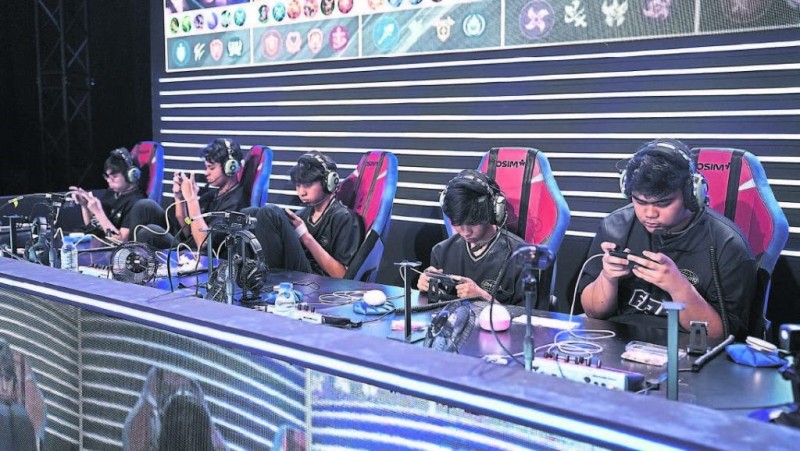

DATING as early as 1972, the first documented video game competition was held for the game Spacewar at Stanford University. Students were invited to an “intergalactic space war Olympics” with a year’s worth of Rolling Stones subscription as the grand prize.
Electronic sports, or more commonly known as esports, is a term used for video game competitions. They are frequently structured, multiplayer video game events, especially between professional players either individually or in teams.
In contrast to traditional sports such as football and badminton, esports athletes compete virtually through gaming platforms such as computers, consoles and mobile phones.
According to the International Journal of Communication 7, titled “Pioneering E-Sport: The Experience Economy and the Marketing of Early 1980s Arcade Gaming Contests”, the origins of modern esports can be traced back to competitive face-to-face arcade video game events.
Japanese multinational video game and entertainment company, Sega Corp, hosted the “All Japan TV Game Championships” in 1974, a countrywide arcade video game tournament that aimed to promote the play and sales of video games in the country.
PC World, a global computer magazine, said esports first gained popularity in East Asia, particularly China and South Korea (which licensed professional players in 2000), but less so in Japan, which has strict anti-gambling regulations that make professional gaming competitions illegal.
Furthermore, GameSpot, an American video gaming website viewership in esports was roughly 85% male and 15% female, with the majority of viewers aged 18 to 34 in the early 2010s.
For a long time, esports have been a part of video game culture. Video games were primarily a hobby until the late 2000s, when it experienced a huge increase in popularity as a competitive spectator sport.
Game makers were actively building video games to appeal to the professional esports subculture by the 2010s.
Tracking its origin in Malaysia, the Malaysian Investment Development Authority said in 2018 that the gaming industry contributed US$100 million (RM468 million) to Malaysia’s revenue and is predicted to expand at a 10.9% annual rate (CAGR 2018-2023), resulting in a market volume of US$168 million by 2023.
Malaysia is also ranked 21st in the world in terms of game income, with a total of US$633 million.
According to the Youth and Sports Ministry (KBS) Strategic Plan for Esports Development 2020-2025, the RM10 million stated in the Budget 2019 for the investment of esports was the first-ever annual budget announcement in South-East Asia (SE Asia) focused exclusively on the development of its kind.
With more than 14 million gamers, Malaysia has the best potential to lead the development of esports in the region.
The country has a large pool of gamers, a steadfast growth in esports players, an increasing number of esports events, and most importantly, support from the government.
KBS had also previously proactively engaged with the gaming community to devise an athlete development plan, to build a fair and inclusive ecosystem, as well as to magnify the scale of esports to a greater depth and level of attention.
The ministry had engagement sessions throughout SE Asia in understanding the market, its potential to develop in the country and the trends among the Asean youth and digital industry.
Malaysia is best suited to be the region’s hub as it is supported not only by the government but also the local gaming community, good infrastructure as well as high purchasing power in the digital market.
Source: https://themalaysianreserve.com/2023/09/11/esports-as-emerging-sector-boosting-malaysias-economy/