

Image credit: Berita Harian
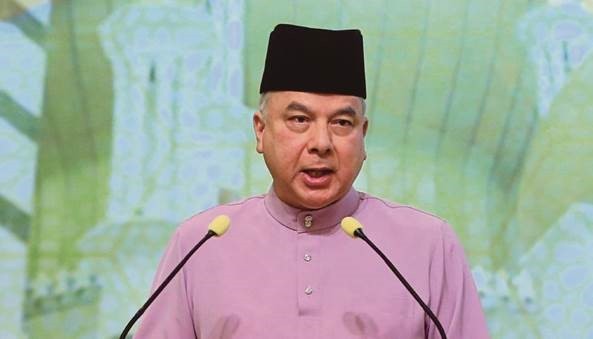
KUALA LUMPUR: Malaysia could become the preferred Islamic finance arbitration hub if efforts to increase awareness of the dispute resolution mechanism were made, Sultan of Perak Sultan Nazrin Muizzuddin Shah said.
Sultan Nazrin said it was good to see dispute resolution mechanisms evolving from conventional mechanisms, particularly from conventional arbitration to Islamic arbitration.
"As a leading centre for Islamic finance, Malaysia should continue to focus on this area of dispute resolution within the general framework of Islam," he said.
"The Asian International Arbitration Centre (AIAC) would do well to gather a pool of experts in this area to become the preferred hub in Asia, specialising in Islamic finance arbitration, as well as in disputes within halal industries."
Sultan Nazrin said this during his keynote address at the AIAC's Asia Alternative Dispute Resolution Week 2022 here today.
Sultan Nazrin said two challenges should be highlighted in this regard, which are the low uptake of Islamic arbitration and lack of awareness.
"Despite Malaysia having a comprehensive and up-to-date legal framework for Islamic arbitration in place through the AIAC, arbitration of Islamic finance disputes is not a popular option.
"Rather, litigation is still preferred. One reason for this, according to the ICC Task Force on Financial Institutions and International Arbitration in its 2018 report, is that Islamic financial institutions are reluctant to have their disputes decided by arbitrators in accordance with shariah because of the greater uncertainty of the outcome."
Sultan Nazrin added that a lack of awareness of the various products and services that deliver Islamic forms of arbitration could be another reason for the limited uptake.
"So, increasing understanding of Islamic arbitration and its benefits among stakeholders is another important task.
"Islamic arbitration provides a unique path to amicable dispute resolution for businesses in this space. By providing a confidential means of settling disputes and maintaining the mutual goodwill of the parties, it helps to promote more stable business relationships."
He added that a distinctive feature of Islamic arbitration is the need for an additional layer of consultation with either the Shariah Council or a shariah expert.
"According to Rule 29 of the i-Arbitration Rules 2021, the Shariah Council has a maximum of 90 days to make its ruling. After this, the arbitrator may decide on the issue on their own. This pre-arbitration tier increases the time taken to resolve any case.
"To address this issue, steps could be taken to train those with specialisation in shariah, fiqh (jurisprudence) and muamalat (finance) as Islamic arbitrators.
"This would enable disputes to be resolved without the need to involve a Shariah Council or an expert," he said, adding that this would make Islamic arbitration more attractive and "easier" than litigation.
To enable this, Sultan Nazrin added that incentives and career paths must be formulated so that shariah graduates could pursue a career as an Islamic arbitrator.
"In other words, talent and human resources should be developed in the field of Islamic arbitration."
Themed "Compassus: The Odyssean Course to Modern Alternative Dispute Resolution", the five-day conference is being held until tomorrow at Bangunan Sulaiman here.
Source: https://www.nst.com.my/news/nation/2022/10/837769/sultan-nazrin-increase-awareness-make-malaysia-islamic-finance